
Creamy Pesto Chicken Pasta – Family Favorite Weeknight Dinner
Tender pieces of juicy chicken nestled in perfectly cooked pasta, all wrapped in the most incredible creamy pesto sauce that makes your taste buds dance with joy. This pesto chicken pasta is pure weeknight magic that tastes like you spent hours in the kitchen, but secretly takes just 30 minutes from start to finish.
It’s become our family’s go-to dinner when we need something special without the stress, and honestly, the kids ask for it at least twice a week. The vibrant green sauce might look fancy, but don’t let that fool you – this recipe is wonderfully simple and uses ingredients you probably already have at home.
If you loved our garlic butter chicken recipe, this creamy pasta dish will quickly become another favorite that earns you those “best cook ever” compliments at the dinner table.
What is Pesto Chicken Pasta?
Ever wonder why something so simple sounds so fancy? Pesto chicken pasta is basically happiness in a bowl, combining Italian-style basil pesto with tender chicken and your favorite pasta shape. The name comes from the word “pesto,” which means “to pound” in Italian, referring to the traditional way of crushing fresh basil, garlic, and pine nuts together.
But here’s the beautiful truth: you don’t need to be a professional chef or spend hours pounding ingredients to create this restaurant-quality meal at home. They say the way to anyone’s heart is through their stomach, and trust me, this dish proves that saying right! Ready to create some kitchen magic? Let’s dive in and make a dinner that’ll have everyone asking for seconds.
Why You’ll Love This Pesto Chicken Pasta
Restaurant-Quality Flavor Without the Price Tag
Imagine ordering your favorite creamy pasta dish at an Italian restaurant – now imagine making something even better right in your own kitchen for a fraction of the cost. This pesto chicken pasta delivers that same luxurious, indulgent experience without draining your wallet.
The combination of aromatic basil pesto, perfectly seasoned chicken, and silky cream creates layers of flavor that make every single bite absolutely irresistible. Your family will genuinely think you’ve been hiding secret chef skills from them.
Budget-Friendly Family Meal
Let’s talk about real savings here. A single serving of pesto chicken pasta at a restaurant could easily cost $15-20 per person, but making this at home costs approximately $3-4 per serving. You’re feeding your whole family a gourmet-style dinner for what you’d pay for one restaurant portion. Plus, you control the quality of ingredients, ensuring everything is fresh and wholesome. That’s what I call a delicious win-win situation!
Irresistible Ingredients and Toppings
The magic happens when creamy sauce hugs every piece of pasta, while bursts of fresh basil flavor from the pesto create the most amazing taste sensation. Add in golden-brown chicken pieces that are tender and juicy, sprinkle some freshly grated Parmesan cheese on top, and finish with optional sun-dried tomatoes or cherry tomatoes for pops of sweetness.
Each ingredient plays its perfect part in this symphony of flavors. If you enjoy our creamy garlic chicken pasta, you’ll absolutely adore how the pesto adds that extra special something that elevates this dish to new heights.
Ready to transform simple ingredients into an extraordinary family dinner? Let’s get cooking and bring some Italian-inspired joy to your table tonight!
How to Make Pesto Chicken Pasta
Quick Overview
This delicious pesto chicken pasta comes together faster than ordering takeout! You’ll love how easy it is to create such a creamy, flavorful, and satisfying meal that looks and tastes absolutely restaurant-worthy. The secret lies in the velvety pesto sauce that coats every piece of pasta and tender chicken, creating comfort food at its finest.
Cooking Time Breakdown:
- Prep Time: 10 minutes
- Cook Time: 20 minutes
- Total Time: 30 minutes
- Servings: 6 people
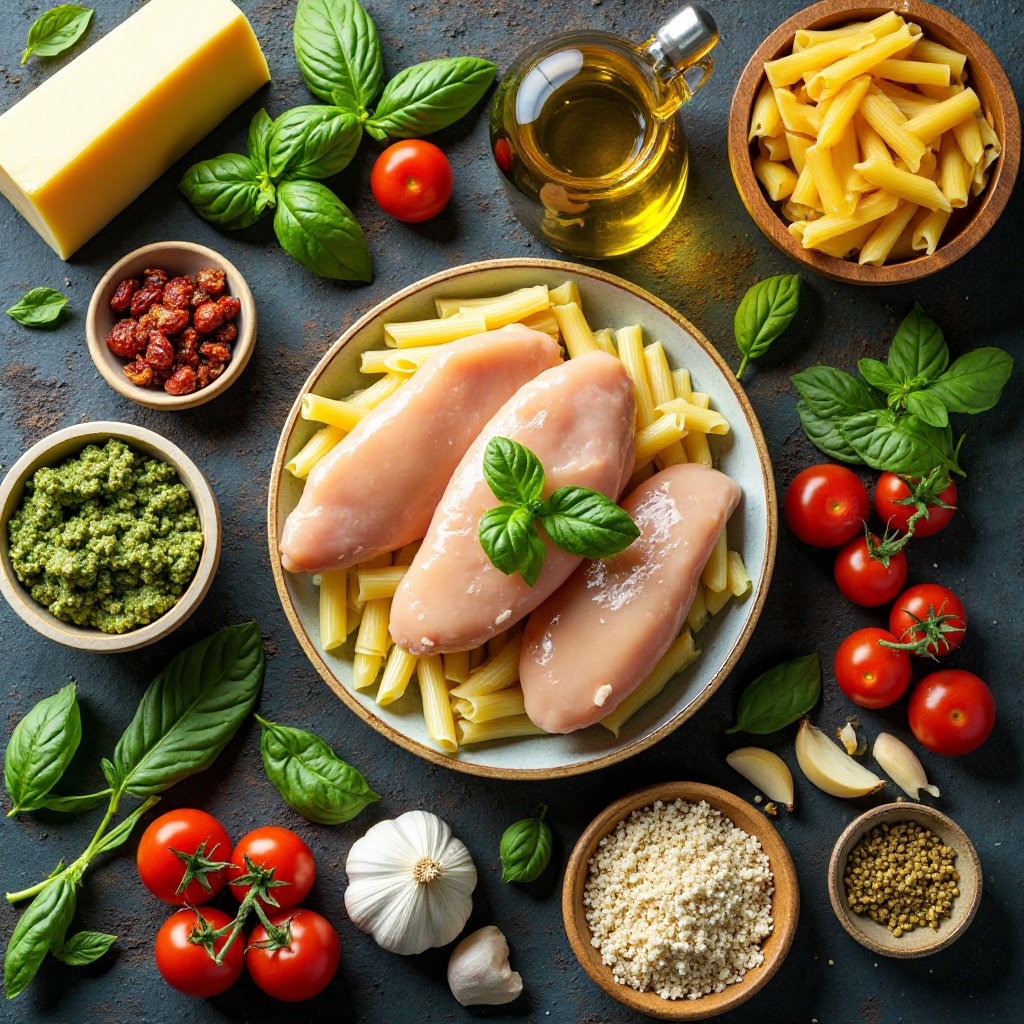
Key Ingredients for Pesto Chicken Pasta
For the Pasta and Chicken:
- 1 pound (16 oz) penne pasta (or your favorite pasta shape)
- 1.5 pounds boneless, skinless chicken breasts, cut into bite-sized pieces
- 2 tablespoons olive oil
- 1 teaspoon Italian seasoning
- 1/2 teaspoon salt
- 1/4 teaspoon black pepper
- 3 cloves garlic, minced
For the Creamy Pesto Sauce:
- 1 cup basil pesto (store-bought or homemade)
- 1 cup heavy cream
- 1/2 cup chicken broth
- 1 cup freshly grated Parmesan cheese
- 1/4 teaspoon red pepper flakes (optional, for a tiny kick)
Optional Add-Ins and Toppings:
- 1 cup cherry tomatoes, halved
- 1/2 cup sun-dried tomatoes, chopped
- 2 cups fresh spinach
- Fresh basil leaves for garnish
- Extra Parmesan cheese for serving
- Toasted pine nuts
Pro Tip: Having all your ingredients measured and ready before you start cooking (this is called “mise en place”) makes the whole process smooth and stress-free!
Step-by-Step Instructions
How do you prepare the chicken for pesto chicken pasta?
Start by cutting your chicken breasts into evenly-sized bite-sized pieces, about 1-inch cubes. This ensures they cook at the same rate and stay tender and juicy throughout.
Pat the chicken pieces dry with paper towels – this step is important because dry chicken browns beautifully instead of steaming.
Season all the chicken pieces generously with Italian seasoning, salt, and black pepper, making sure every piece gets coated.
Toss the chicken gently with your hands or a spoon to distribute the seasonings evenly across all surfaces.
How do you cook the pasta perfectly?
Bring a large pot of water to a rolling boil and add a generous amount of salt – the water should taste like the ocean. This is your only chance to season the pasta from the inside out, so don’t skip this step!
Add your penne pasta and cook according to the package directions until al dente, which means the pasta should have a slight firmness when you bite into it.
Here’s the crucial part: before draining, scoop out and save about 1 cup of the starchy pasta cooking water. This magical liquid will help create a silky sauce that clings to every piece of pasta.
Drain the pasta in a colander but do not rinse it – you want to keep that starchy coating.
How do you cook the chicken to golden perfection?
Heat the olive oil in a large, deep skillet or pan over medium-high heat until it shimmers.
Add the seasoned chicken pieces in a single layer, making sure not to overcrowd the pan (work in batches if needed).
Let the chicken cook undisturbed for about 3-4 minutes on the first side until it develops a beautiful golden-brown crust.
Flip the pieces and cook for another 3-4 minutes on the other side until the chicken is cooked through and no longer pink in the center. The internal temperature should reach 165°F if you’re using a meat thermometer.
Add the minced garlic during the last minute of cooking and stir constantly so it becomes fragrant but doesn’t burn.
Transfer the cooked chicken to a clean plate and set aside.
How do you make the creamy pesto sauce?
In the same skillet where you cooked the chicken (don’t wash it – all those browned bits add incredible flavor!), reduce the heat to medium.
Pour in the chicken broth and use a wooden spoon to scrape up all the delicious browned bits stuck to the bottom of the pan – this is called deglazing and adds amazing depth to your sauce.
Add the heavy cream and stir everything together until well combined.
Let this mixture come to a gentle simmer, then reduce the heat to medium-low.
Stir in the basil pesto and mix until the sauce is smooth and beautifully green throughout.
Add the grated Parmesan cheese gradually, stirring constantly as it melts into the sauce and creates that dreamy, velvety texture.
If you’re using red pepper flakes for a subtle warmth, add them now.
How do you combine everything together?
Add the cooked pasta and chicken back into the skillet with the creamy pesto sauce.
Toss everything together gently but thoroughly, making sure every piece of pasta and chicken gets coated in that gorgeous sauce.
If the sauce seems too thick or isn’t coating the pasta smoothly, add the reserved pasta water a little bit at a time (start with 2-3 tablespoons) until you reach the perfect consistency. The sauce should be creamy and clingy, not watery or too thick.
This is where you can fold in optional ingredients like cherry tomatoes, sun-dried tomatoes, or fresh spinach. If using spinach, the heat from the pasta will wilt it perfectly in just a minute or two.
Taste and adjust the seasoning with more salt and pepper if needed.
How do you serve pesto chicken pasta?
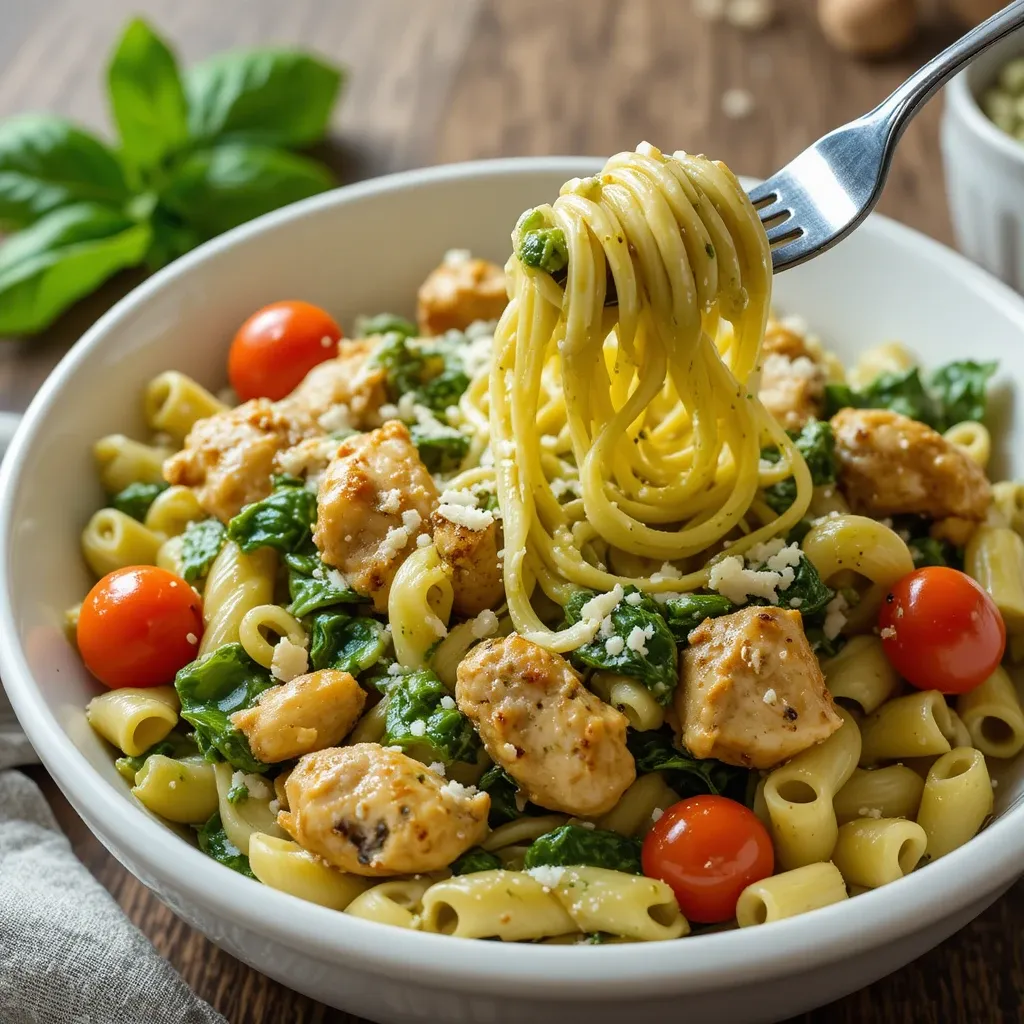
Transfer the pesto chicken pasta to a large serving bowl or individual plates while it’s still piping hot.
Garnish generously with freshly torn basil leaves, an extra sprinkle of Parmesan cheese, and toasted pine nuts if you’re feeling fancy. The fresh basil adds a bright pop of flavor that takes this dish to the next level.
Serve immediately while the pasta is at its creamiest and most delicious.
Watch as everyone digs in with enthusiasm – this is one of those dishes that disappears fast!
What to Serve Pesto Chicken Pasta With
This hearty pesto chicken pasta is honestly satisfying enough to stand on its own, but pairing it with the right sides takes your dinner from great to absolutely spectacular. Here are some wonderful combinations that balance the rich, creamy pasta perfectly:
Fresh and Crispy Salads: A simple Caesar salad with crunchy romaine lettuce and homemade croutons cuts through the richness beautifully. Or try a light mixed green salad with a zesty lemon vinaigrette – the bright, tangy dressing provides a refreshing contrast to the creamy pesto. For something different, a caprese salad with fresh mozzarella, ripe tomatoes, and basil echoes the Italian flavors wonderfully.
Bread for Sauce Soaking: Warm, crusty garlic bread is basically mandatory in my house – it’s perfect for soaking up every last bit of that incredible creamy pesto sauce. Homemade focaccia bread with rosemary and olive oil makes this meal feel extra special. Or keep it simple with a warm baguette sliced and lightly toasted.
Roasted Vegetables: Roasted broccoli with garlic and Parmesan complements the pasta while adding extra vegetables to your meal. Roasted asparagus with lemon zest brings a fresh, spring-like quality. Oven-roasted cherry tomatoes become sweet and jammy, adding bursts of bright flavor.
Beverage Pairings: For the whole family, try sparkling water with lemon slices or homemade iced tea with fresh mint. Kids especially love a fruit-infused water or their favorite juice. Fresh lemonade or apple cider are also wonderful choices that everyone can enjoy.
Top Tips for Perfecting Pesto Chicken Pasta
Should you use homemade or store-bought pesto?
Both options work wonderfully! Store-bought pesto is a fantastic time-saver and delivers consistent results every time – look for refrigerated pesto rather than jarred for the freshest flavor. However, if you have fresh basil growing in your garden or want ultimate freshness, homemade pesto takes this dish to extraordinary levels. Homemade allows you to control the garlic intensity, salt levels, and richness. Taste your pesto before adding it to the sauce, especially store-bought varieties, as some brands are saltier than others.
What’s the best pasta shape for this recipe?
Penne is my go-to choice because those little ridges and hollow tubes trap the creamy sauce perfectly, creating maximum flavor in every bite. However, this recipe is wonderfully versatile! Rigatoni, fusilli, farfalle (bow ties), or rotini all work beautifully. Even long pasta like fettuccine or spaghetti can be delicious, though they hold the sauce differently. Avoid tiny pasta shapes like orzo or ditalini as they won’t showcase the sauce and chicken pieces as well.
How do you prevent the chicken from drying out?
The secret is cutting the chicken into uniform bite-sized pieces so everything cooks evenly, and not overcooking them. Chicken is done when it reaches 165°F internally – any higher and it starts getting dry. Another pro tip: don’t move the chicken around too much while it’s cooking. Let it sit undisturbed for a few minutes to develop that golden crust, which locks in moisture. If you’re worried about dry chicken, chicken thighs are naturally more forgiving and stay juicier, though they have a slightly different flavor.
Can you make this dish lighter or healthier?
Absolutely! Use half-and-half instead of heavy cream for a lighter sauce that’s still creamy. Swap regular pasta for whole wheat pasta, chickpea pasta, or even zucchini noodles for fewer carbs and more nutrients. Add extra vegetables like spinach, broccoli, peas, or bell peppers to boost nutrition and color. You can also use less chicken and more vegetables to change the protein-to-veggie ratio.
What if your sauce is too thick or too thin?
Sauce consistency is easy to adjust! If your sauce is too thick and gloppy, add reserved pasta water one tablespoon at a time, stirring well after each addition. The starchy pasta water helps thin the sauce while keeping it silky. If your sauce is too thin and runny, let it simmer gently for a few more minutes to reduce and thicken. You can also add a bit more Parmesan cheese, which thickens as it melts. Remember, the sauce will thicken slightly as it cools, so aim for slightly thinner than your ideal consistency while it’s hot.
How do you prevent the sauce from separating?
Temperature control is key here! Keep the heat at medium or medium-low when making the sauce – high heat can cause the cream and cheese to separate and become grainy. Always add cheese gradually while stirring constantly, which helps it melt smoothly into the sauce. If you see the sauce starting to look oily or separated, remove it from heat immediately and whisk vigorously. Adding a splash of pasta water while whisking can help bring it back together.
Can you use different proteins instead of chicken?
This recipe is incredibly adaptable! Shrimp cooks even faster than chicken and pairs beautifully with pesto – just cook until pink and opaque. For a vegetarian version, leave out the meat entirely and add extra vegetables like mushrooms, zucchini, or roasted bell peppers. Cooked chickpeas can add protein to a vegetarian version. Leftover rotisserie chicken is perfect when you want to save even more time.
Should you rinse the pasta after cooking?
Never! This is one of the biggest mistakes people make. Rinsing pasta washes away the starchy coating that helps sauce cling to it. That starch is your friend – it’s what makes the sauce velvety and helps it coat every piece of pasta perfectly. The only time you should rinse pasta is when making cold pasta salad, which isn’t the case here.
Storing and Reheating Tips
How do you store leftover pesto chicken pasta?
Let the pasta cool to room temperature first, but don’t leave it sitting out for more than 2 hours for food safety. Transfer leftovers to an airtight container and refrigerate promptly. Properly stored pesto chicken pasta will stay fresh in the refrigerator for up to 3-4 days. Make sure the container is truly airtight to prevent the pasta from drying out and to keep the pesto’s vibrant color from oxidizing and turning darker.
Can you freeze pesto chicken pasta?
While you technically can freeze this dish for up to 2 months, I’ll be honest – creamy sauces don’t always freeze and thaw perfectly. The cream can separate and become grainy when reheated, and the pasta texture may suffer. If you do decide to freeze it, use freezer-safe containers and leave about an inch of space at the top for expansion. Label with the date so you know when to use it by. Thaw completely in the refrigerator overnight before reheating.
What’s the best way to reheat pesto chicken pasta?
For stovetop reheating (my preferred method): Place the pasta in a skillet over medium-low heat. Add 2-3 tablespoons of chicken broth, cream, or milk to help reconstitute the sauce. Stir gently and frequently until heated through, about 5-7 minutes. This method gives you the most control and helps prevent the sauce from breaking.
For microwave reheating: Transfer a portion to a microwave-safe dish. Add a splash of milk or broth and cover with a damp paper towel to prevent drying. Microwave in 30-second intervals, stirring between each interval, until steaming hot throughout. This usually takes 2-3 minutes depending on the portion size.
Do leftovers taste as good as fresh?
Honestly, this pasta is definitely best enjoyed fresh when the sauce is at peak creaminess and the pasta has perfect texture. However, properly stored and reheated leftovers are still absolutely delicious and make fantastic next-day lunches! Some people actually prefer eating the leftovers cold as a pasta salad. The flavors have had time to meld together, which can be really tasty. Just add a drizzle of olive oil and maybe some fresh lemon juice to brighten it up if eating cold.
Tips for Avoiding Common Mistakes
Don’t overcook the pasta: Pasta continues cooking slightly after you drain it and especially when you toss it in the hot sauce. Always cook pasta 1-2 minutes less than the package directions for al dente texture. Mushy, overcooked pasta ruins the entire dish and won’t hold the sauce properly.
Don’t overcrowd the pan when cooking chicken: If you pile too much chicken in the pan at once, it steams instead of browning, leaving you with pale, rubbery chicken instead of golden, flavorful pieces. Cook in batches if necessary, giving each piece space to breathe and develop that delicious crust.
Don’t forget to save pasta water: This is such an easy step to forget, but it’s crucial! That starchy water is liquid gold for adjusting sauce consistency. Set a measuring cup next to your pot as a visual reminder to scoop some out before draining.
Don’t add garlic too early: Garlic burns quickly and turns bitter when overcooked. Always add it toward the end of cooking the chicken, giving it just enough time to become fragrant and golden, not dark brown.
Don’t use pre-grated cheese from a bag: Those convenient bags of pre-shredded Parmesan contain anti-caking agents that prevent smooth melting. They create a grainy, separated sauce instead of the silky texture you want. Buy a block of Parmesan and grate it fresh – it takes 2 extra minutes and makes a world of difference.
Don’t cook the sauce over high heat: High heat causes cream and cheese sauces to separate, leaving you with an oily, curdled mess instead of velvety perfection. Medium to medium-low heat gives you control and ensures smooth, gorgeous sauce every time.
Don’t skip seasoning at each step: Season the chicken before cooking, taste your pesto before adding, and always taste the final dish before serving. Building layers of seasoning creates complex, balanced flavors instead of flat, boring pasta.
Don’t make the sauce too far in advance: Creamy pesto sauce is best made right before serving. If it sits too long, the pasta absorbs the sauce, leaving you with dry noodles. This is a quick dish meant to go from pan to plate to mouth without waiting around!
Frequently Asked Questions
Can I use chicken thighs instead of chicken breasts?
Absolutely! Boneless, skinless chicken thighs are actually more forgiving than breasts because they contain more fat, which keeps them moist and juicy even if slightly overcooked. They have a richer, deeper flavor that many people prefer. Cut them into the same bite-sized pieces as you would chicken breasts and cook them the same way. The cooking time might be slightly longer, so always check that the internal temperature reaches 165°F.
What can I substitute for heavy cream?
You have several options depending on what you’re looking for! Half-and-half creates a lighter but still creamy sauce. For an even lighter version, use whole milk mixed with 2 tablespoons of cream cheese for body. Coconut cream from a can works for dairy-free diets and adds a subtle sweetness. Cashew cream is another wonderful dairy-free option that’s rich and neutral-tasting.
How do I make this recipe gluten-free?
Simply swap regular pasta for your favorite gluten-free pasta brand! Chickpea pasta, brown rice pasta, and quinoa pasta all work beautifully with this sauce. Just follow the cooking instructions on your gluten-free pasta package, as cooking times vary by brand. Make sure your pesto is gluten-free (most are, but always check labels) and verify that your chicken broth doesn’t contain gluten.
Can I make this recipe dairy-free?
Yes! Use dairy-free pesto (many store-bought versions are naturally dairy-free or you can make your own without cheese). Replace heavy cream with full-fat coconut cream or cashew cream. Skip the Parmesan or use a dairy-free Parmesan alternative. Nutritional yeast adds a cheesy, umami flavor without dairy. The flavor will be different but still absolutely delicious!
Is pesto chicken pasta kid-friendly?
Most kids love this dish! The creamy sauce is familiar and comforting, similar to mac and cheese but with more grown-up flavors. If you have very picky eaters, start with less pesto and gradually increase the amount as they get used to the flavor. You can also blend some spinach into the sauce for hidden vegetables. Let kids help make the recipe – they’re more likely to eat something they helped create!
Can I use pre-cooked or rotisserie chicken?
Definitely! This is one of my favorite shortcuts when I’m really pressed for time. Skip the chicken cooking steps entirely and just add bite-sized pieces of rotisserie chicken when you add the pasta back to the sauce. You just need to warm it through for 2-3 minutes. This can cut your total cooking time down to about 15 minutes, making it even more of a weeknight lifesaver.
Why did my sauce become oily or separated?
This usually happens when the sauce gets too hot, causing the fats to separate from the liquids. Remove the pan from heat immediately and whisk vigorously. Adding a bit of pasta water while whisking can help re-emulsify the sauce. To prevent this, always keep your heat at medium or below when making cream sauces, and add cheese gradually while stirring constantly.
How can I make this recipe spicier?
There are several ways to add heat! Increase the amount of red pepper flakes in the sauce. Add diced fresh jalapeños when cooking the garlic. Drizzle some hot sauce over individual portions for customizable heat levels. Mix some cayenne pepper into your chicken seasoning before cooking.
Can I add vegetables to this recipe?
Absolutely – vegetables make this even better! Cherry tomatoes, sun-dried tomatoes, spinach, broccoli, peas, roasted red peppers, asparagus, and zucchini all work wonderfully. Add heartier vegetables like broccoli when cooking the chicken so they have time to soften. Delicate vegetables like spinach or peas can be stirred in at the very end and will wilt/warm through in the residual heat.
What type of pesto works best?
Traditional basil pesto is classic and my personal favorite for this recipe. However, you can experiment with different pestos for variety! Sun-dried tomato pesto adds sweet, tangy notes. Arugula pesto brings a peppery kick. Kale pesto or spinach pesto are milder and sneak in extra greens. Just make sure whatever pesto you choose is one you genuinely enjoy, since it’s a star ingredient here.
How do I know when the chicken is fully cooked?
The most reliable method is using an instant-read meat thermometer – chicken is safe to eat at 165°F internal temperature. Visually, the chicken should be white throughout with no pink remaining. The juices should run clear when you cut into the thickest piece. If you’re unsure, it’s always better to cook a little longer than to risk undercooked chicken.
Can I make this dish ahead of time?
This pasta is truly best made and served fresh because cream sauces and pasta don’t hold well together over time. However, you can prep components ahead! Cook and season the chicken up to 1 day in advance and refrigerate. Measure out all your ingredients so you can just throw everything together quickly when it’s time to cook. The actual cooking process is so fast that making it fresh doesn’t require much time.
Nutrition Information
| Nutrient | Amount Per Serving |
|---|---|
| Calories | 520 kcal |
| Protein | 32g |
| Carbohydrates | 42g |
| Fat | 24g |
| Saturated Fat | 11g |
| Cholesterol | 95mg |
| Sodium | 680mg |
| Fiber | 3g |
| Sugar | 3g |
| Calcium | 280mg |
| Iron | 2.5mg |
Note: Nutrition information is approximate and calculated per serving based on a recipe serving 6 people. Values may vary depending on specific ingredients and brands used.
This pesto chicken pasta has become one of those recipes I turn to again and again when I need something that feels special but doesn’t require hours of work or fancy ingredients. There’s something magical about watching plain pasta, chicken, and pesto transform into this incredibly creamy, flavorful dish that makes everyone at the table smile. Whether you’re feeding picky kids, impressing dinner guests, or just treating yourself to a delicious homemade meal, this recipe delivers every single time.
The beauty of this dish lies in its simplicity and versatility. You can make it exactly as written for classic perfection, or customize it with your family’s favorite vegetables, different pasta shapes, or protein swaps. It’s forgiving enough for beginners yet delicious enough that experienced cooks will appreciate the elegant results.
I’d love to hear how this pesto chicken pasta turns out for you! Did you add any special touches? Did your kids surprise you by loving it? Share your experience in the comments below, and don’t forget to rate the recipe. Your feedback helps other home cooks know what to expect and gives me those warm fuzzies knowing you’re enjoying these recipes. Happy cooking, friends – now go make some pasta magic happen in your kitchen tonight!
