
30 Minute Pasta Primavera Recipe – Easy Family Dinner
Imagine twirling your fork into a bowl of tender pasta ribbons coated in the most delightful garlic-lemon sauce, brimming with rainbow-colored vegetables that practically dance on your plate. That’s Pasta Primavera for you—a vibrant celebration of freshness that transforms simple ingredients into something truly magical.
Here’s a fun fact: despite its Italian name meaning “spring,” this beloved dish was actually created in 1970s New York! What makes this recipe so special is how effortlessly it brings families together around wholesome, nourishing food that even picky eaters can’t resist. With just 30 minutes from start to finish, you’ll have a restaurant-quality meal ready without breaking a sweat.
Much like our popular Creamy Garlic Pasta, this dish proves that simple ingredients create extraordinary flavors. The difference? Pasta Primavera packs in way more vegetables, making it the perfect choice when you want to sneak extra nutrition into your family’s diet. Ready to bring this colorful masterpiece to your dinner table tonight?
What is Pasta Primavera?
Ever wondered why a dish sounds so fancy yet tastes like pure comfort food heaven? “Primavera” translates to “spring” in Italian, but here’s the twist—this isn’t actually an Italian recipe! It was born in the bustling kitchens of New York City’s Le Cirque restaurant. The name celebrates the bounty of spring vegetables, though you can absolutely enjoy this year-round treasure with whatever fresh produce catches your eye.
Think of it as nature’s edible rainbow meeting perfectly cooked pasta in a beautiful friendship. After all, they say the way to anyone’s heart is through their stomach, and nothing says love quite like a plate piled high with tender veggies and pasta goodness. Why not give this family favorite a try and watch your loved ones ask for seconds?
This recipe was generated using artificial intelligence and has not been cooked by us. We aim to support our readers, and people who’ve tried other recipes from our site report good results.
Why You’ll Love This Pasta Primavera
A Burst of Fresh Garden Flavors
The star of this show is undoubtedly the medley of crisp-tender vegetables. Each bite delivers a satisfying crunch from bright bell peppers, sweet bursts from cherry tomatoes, and earthy notes from tender zucchini. The garlic-infused olive oil ties everything together while fresh lemon juice adds that irresistible zing that wakes up your taste buds. Unlike heavy cream-based pastas, this version feels light and energizing—perfect for busy weeknights when you need something wholesome but not weighed down.
Budget-Friendly Homemade Goodness
Restaurant pasta dishes can easily cost $15-20 per person, but making Pasta Primavera at home means feeding your entire family for a fraction of that price. Most vegetables are affordable year-round, and you probably already have pantry staples like pasta, olive oil, and garlic on hand. Plus, this recipe is brilliant for using up those vegetables sitting in your crisper drawer before they go bad. No more food waste, just delicious savings!
Customizable Toppings & Additions
What I absolutely adore about this recipe is its flexibility. Sprinkle freshly grated Parmesan cheese for that salty, nutty richness. Toss in some fresh basil leaves for an aromatic finish. Want more protein? Add grilled chicken, sautéed shrimp, or chickpeas. Got picky eaters? Stick with their favorite veggies and gradually introduce new ones. This recipe plays well with your family’s preferences, making it a true dinner champion.
If you loved our One-Pot Lemon Chicken Pasta, you’ll flip for this veggie-packed version. Both recipes share that bright, fresh flavor profile but Pasta Primavera puts vegetables front and center. Ready to create this colorful masterpiece in your own kitchen? Let’s dive in!
How to Make Pasta Primavera
Quick Overview
This Pasta Primavera recipe is wonderfully straightforward—perfect for both beginner cooks and busy parents. The vegetables cook quickly while maintaining their beautiful colors and crisp-tender texture. The simple garlic and lemon sauce brings everything together without overpowering the natural sweetness of the veggies. What makes this dish truly special is how the pasta water creates a silky coating that clings to every piece of pasta and vegetable.
Time Breakdown:
- Prep Time: 15 minutes
- Cook Time: 15 minutes
- Total Time: 30 minutes
- Servings: 6 generous portions
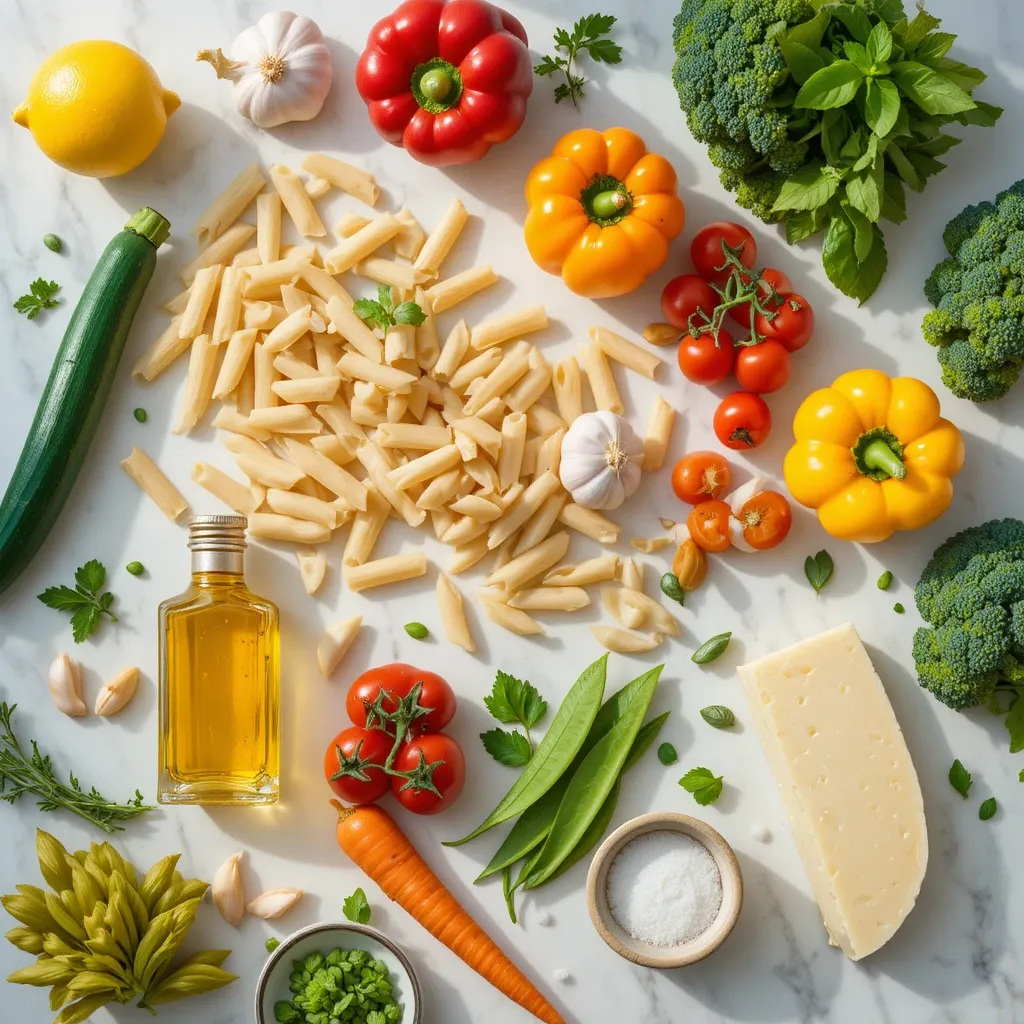
Key Ingredients for Pasta Primavera
Pasta
- 12 ounces penne pasta (or fusilli, farfalle, or rigatoni)
Fresh Vegetables
- 2 medium zucchini, sliced into half-moons
- 1 red bell pepper, cut into strips
- 1 yellow bell pepper, cut into strips
- 1 cup broccoli florets
- 1 cup cherry tomatoes, halved
- 1 cup snap peas or frozen peas
- 1 medium carrot, julienned or thinly sliced
Aromatics & Sauce
- 4 cloves garlic, minced
- 1 small onion, diced
- 1/3 cup extra virgin olive oil
- Zest of 1 lemon
- 3 tablespoons fresh lemon juice
- 1/2 cup reserved pasta water
Finishing Touches
- 1/2 cup freshly grated Parmesan cheese
- 1/4 cup fresh basil leaves, torn
- 2 tablespoons fresh parsley, chopped
- Salt and black pepper to taste
- Red pepper flakes (optional, for a tiny kick)
Step-by-Step Instructions
Step 1: Prepare Your Workspace
Before you begin cooking, wash all your vegetables thoroughly under cool running water. Chop them into uniform, bite-sized pieces so they cook evenly. Having everything prepped and ready (what chefs call “mise en place”) makes the actual cooking process smooth and stress-free. Set out a large bowl for reserving pasta water—you’ll need this liquid gold later!
Step 2: Cook the Pasta
Bring a large pot of water to a rolling boil. Add a generous amount of salt—the water should taste like the sea. This is your only chance to season the pasta from the inside out! Add the penne pasta and cook according to package directions until al dente, usually 10-11 minutes. Al dente means “to the tooth” in Italian—the pasta should have a slight firmness when you bite into it. Before draining, scoop out and reserve 1 cup of the starchy pasta cooking water. This magical liquid will help create your silky sauce later. Drain the pasta and toss with a tiny drizzle of olive oil to prevent sticking.
Step 3: Sauté the Harder Vegetables First
While the pasta is cooking, heat 3 tablespoons of olive oil in a large, deep skillet or wok over medium-high heat. Add the diced onion and cook for 2-3 minutes until it becomes translucent and fragrant. Next, add the minced garlic and stir constantly for 30 seconds—be careful not to let it burn or it will taste bitter. Now add the harder vegetables that need more cooking time: broccoli florets and julienned carrots. Sauté for 3-4 minutes, stirring frequently, until they start to soften but still have a beautiful bright color.
Step 4: Add the Tender Vegetables
Toss in the bell pepper strips, zucchini slices, and snap peas. These vegetables cook faster, so they only need about 3-4 minutes in the pan. Keep stirring everything together so the vegetables cook evenly and develop those lovely caramelized edges. The pan should be hot enough that you hear a nice sizzle, but not so hot that the vegetables burn. Season with salt and freshly ground black pepper to taste.
Step 5: Combine Everything Together
Add the halved cherry tomatoes and cook for just 1-2 minutes until they start to soften and release their juices. Now comes the magic moment! Add the cooked pasta directly to the skillet with all those beautiful vegetables. Pour in the remaining olive oil, fresh lemon juice, and lemon zest.
Start tossing everything together gently. Add the reserved pasta water a little at a time (you might not need all of it) until you create a light, silky coating that brings everything together. The starch from the pasta water emulsifies with the olive oil to create a sauce-like consistency.
Step 6: Add the Finishing Touches
Remove the skillet from heat. Sprinkle in the freshly grated Parmesan cheese and toss until it melts into the pasta, creating an even more luscious coating. Tear in the fresh basil leaves and add the chopped parsley. Give everything one final gentle toss. Taste and adjust the seasonings—you might want more salt, pepper, lemon juice, or even a pinch of red pepper flakes for subtle warmth.
Step 7: Serve Immediately
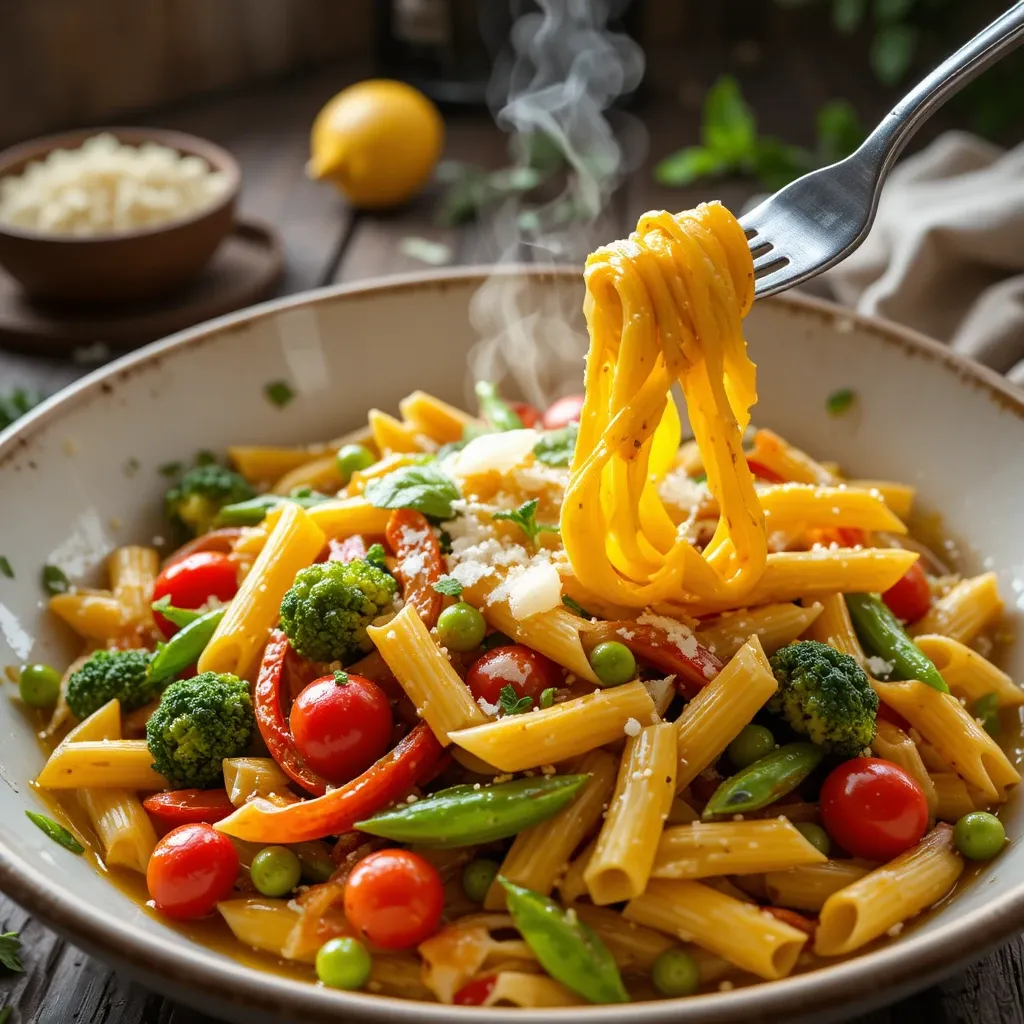
Transfer your gorgeous Pasta Primavera to a large serving bowl or individual plates. Top with extra Parmesan cheese, a few fresh basil leaves, and maybe a drizzle of your best olive oil. Serve immediately while the pasta is hot and the vegetables are at their peak texture. Watch your family’s faces light up as they dig into this colorful, delicious meal!
What to Serve Pasta Primavera With
While Pasta Primavera makes a complete meal on its own thanks to all those nutritious vegetables and satisfying pasta, you can certainly round it out with complementary sides:
- Crusty Garlic Bread: Perfect for soaking up any extra sauce left in your bowl. The buttery, garlicky crunch contrasts beautifully with the tender pasta and vegetables.
- Simple Green Salad: A crisp romaine or mixed greens salad with a light vinaigrette adds freshness and balances the richness of the Parmesan cheese.
- Grilled Protein: Serve alongside grilled chicken breasts, lemon herb shrimp skewers, or pan-seared salmon for extra protein and heartiness.
- Herb Focaccia: This Italian flatbread is perfect for mopping up every last bit of that garlicky, lemony goodness.
- Chilled White Wine or Sparkling Water: A glass of crisp Pinot Grigio or sparkling water with lemon wedges complements the bright flavors beautifully (for adults, of course!).
Top Tips for Perfecting Pasta Primavera
Don’t Overcook Your Vegetables
The secret to restaurant-quality Pasta Primavera is keeping your vegetables crisp-tender, not mushy. They should still have a slight bite and maintain their vibrant colors. Overcooked vegetables become dull, lifeless, and lose their nutritional value. Cook them just until they’re tender enough to pierce with a fork but still have structure.
Use High-Quality Olive Oil
Since olive oil is a main component of the sauce, invest in a good quality extra virgin olive oil. The flavor really shines through and makes a noticeable difference. Save the cheap stuff for other cooking and use your nice bottle for this dish.
Salt Your Pasta Water Generously
Many home cooks under-salt their pasta water. The water should taste pleasantly salty, almost like seawater. This is the only opportunity to season the pasta itself from the inside. Unsalted pasta tastes flat no matter how much you season the sauce later.
Reserve More Pasta Water Than You Think
That starchy pasta cooking water is liquid gold for creating silky sauces. Always reserve at least 1 cup before draining, even if you think you won’t need it all. You can always pour unused water down the drain, but you can’t get it back once it’s gone!
Cut Vegetables Uniformly
Take the extra minute to cut your vegetables into similar-sized pieces. This ensures they all cook at the same rate and you won’t end up with some pieces raw and others overcooked. Aim for bite-sized pieces that are easy to twirl with pasta on your fork.
Add Cheese Off the Heat
Always remove the pan from heat before adding Parmesan cheese. If the pan is too hot, the cheese can become grainy and clumpy instead of melting smoothly into a creamy coating.
Substitute Vegetables Freely
Don’t have zucchini? Use yellow squash or eggplant. No bell peppers? Try asparagus or green beans. The beauty of Pasta Primavera is its flexibility. Use whatever fresh vegetables look best at your market or are hiding in your refrigerator.
Make It Seasonal
Embrace the spirit of “primavera” by using seasonal produce. In spring, use asparagus and peas. Summer calls for zucchini, tomatoes, and bell peppers. Fall? Try butternut squash and Brussels sprouts. Winter works beautifully with broccoli, cauliflower, and kale.
Storing and Reheating Tips
Refrigerator Storage
Transfer any leftover Pasta Primavera to an airtight container once it has cooled to room temperature. Don’t let it sit out for more than 2 hours to maintain food safety. Store in the refrigerator for up to 4 days. The vegetables will soften slightly over time, but the flavors actually deepen and meld together beautifully.
Reheating on the Stovetop
This is the best method for maintaining texture. Place the pasta in a skillet over medium-low heat. Add a splash of water, chicken broth, or olive oil to help revive the sauce. Stir gently and frequently until heated through, about 5-7 minutes. The vegetables will warm up nicely without becoming mushy this way.
Reheating in the Microwave
Place a portion in a microwave-safe bowl and add a tablespoon of water or olive oil. Cover with a microwave-safe lid or damp paper towel to create steam. Heat on medium power (50-70%) in 1-minute intervals, stirring between each interval, until warmed through. This prevents the pasta from drying out or becoming rubbery.
Freezing Instructions
While you can freeze Pasta Primavera for up to 2-3 months, be aware that the texture of the vegetables will change significantly. They’ll become softer and lose that fresh, crisp-tender quality. If you do freeze it, portion it into freezer-safe containers or bags, removing as much air as possible. Thaw overnight in the refrigerator before reheating. For best results, consider freezing the sauce separately and cooking fresh vegetables when you’re ready to eat.
Refreshing Leftovers
Brighten up reheated pasta with a squeeze of fresh lemon juice, a handful of fresh herbs, and an extra sprinkle of Parmesan cheese. These additions can make day-old pasta taste freshly made!
Nutrition Information
| Nutrient | Per Serving |
|---|---|
| Calories | 385 kcal |
| Protein | 13g |
| Carbohydrates | 54g |
| Dietary Fiber | 5g |
| Total Fat | 14g |
| Saturated Fat | 3g |
| Cholesterol | 8mg |
| Sodium | 280mg |
| Vitamin A | 2,450 IU |
| Vitamin C | 95mg |
| Calcium | 145mg |
| Iron | 2.3mg |
*Nutritional values are approximate and based on 6 servings. Actual values may vary depending on specific ingredients and portion sizes.
Common Mistakes to Avoid
Using Too Much Pasta Water at Once
Add pasta water gradually, a few tablespoons at a time. Too much water will make your dish soupy rather than creating that perfect silky coating. You can always add more, but you can’t take it away!
Cooking Vegetables on High Heat
While you want medium-high heat for proper sautéing, going too high causes vegetables to burn on the outside while staying raw inside. Keep the heat at a level where vegetables sizzle nicely but don’t char immediately.
Skipping the Fresh Herbs
Dried herbs can’t replace the bright, aromatic quality of fresh basil and parsley in this dish. They’re worth the small extra cost and make a huge difference in the final flavor profile.
Adding All Vegetables at Once
Different vegetables have different cooking times. Broccoli and carrots need longer than zucchini and tomatoes. Adding everything together results in either mushy soft vegetables or crunchy undercooked ones.
Not Tasting as You Go
Season gradually and taste frequently throughout the cooking process. The final dish should be well-balanced with salt, acid from the lemon, richness from the oil and cheese, and freshness from the herbs.
Using Pre-Grated Cheese
Pre-grated Parmesan contains anti-caking agents that prevent it from melting smoothly. Always grate your own from a fresh block for the best texture and flavor.
Making the Dish Too Far in Advance
Pasta Primavera is best enjoyed immediately after making it. The pasta absorbs the sauce as it sits, and vegetables lose their vibrant texture. If you must prep ahead, cook vegetables and pasta separately and combine just before serving.
Frequently Asked Questions
Can I make Pasta Primavera ahead of time?
While this dish is best served fresh, you can prep the vegetables up to 4 hours ahead and store them covered in the refrigerator. Cook the pasta and combine everything just before serving for the best texture and flavor. Fully assembled pasta can be stored in the fridge for up to 4 days.
Is Pasta Primavera healthy?
Absolutely! This dish is packed with nutrient-rich vegetables providing vitamins, minerals, and fiber. The olive oil offers healthy fats, and the whole-grain pasta option boosts fiber even more. It’s naturally low in saturated fat and can easily be made vegetarian. Just watch your portion sizes and go easy on the cheese if you’re monitoring calories.
Can I use frozen vegetables for Pasta Primavera?
Yes, frozen vegetables work in a pinch, especially peas and broccoli. However, they tend to release more water during cooking, which can make the dish watery. If using frozen vegetables, thaw and pat them very dry with paper towels first. Fresh vegetables will always give you the best texture and flavor.
What pasta shape is best for Pasta Primavera?
Short pasta shapes with ridges or hollows work beautifully because they catch the vegetables and sauce. Penne, farfalle (bow ties), fusilli (spirals), rigatoni, and orecchiette are all excellent choices. Avoid very thin pastas like angel hair, which can get overwhelmed by the chunky vegetables.
How can I make this dish more filling?
Add protein! Grilled chicken breast, sautéed shrimp, white beans, chickpeas, or even cubed tofu transform this into an even heartier meal. You can also use a protein-rich pasta made from lentils or chickpeas for an extra boost.
Can I make Pasta Primavera vegan?
Definitely! Simply omit the Parmesan cheese or use a plant-based Parmesan alternative. The dish is still incredibly flavorful with just the vegetables, olive oil, garlic, and lemon. You might want to add a tablespoon of nutritional yeast for that savory, cheese-like flavor.
Why is my Pasta Primavera bland?
The most common culprit is undersalting the pasta water and not seasoning the vegetables as they cook. Make sure to salt generously at every step. Also, don’t skip the fresh lemon juice—it brightens all the flavors. Finally, use high-quality olive oil and freshly grated Parmesan for maximum flavor impact.
Can I add a creamy sauce to Pasta Primavera?
While traditional Pasta Primavera uses a light olive oil-based sauce, you can absolutely add cream for a richer version. Stir in 1/2 cup of heavy cream or half-and-half along with the pasta water for a luxurious, creamy coating. Some recipes also use cream cheese for extra richness.
What vegetables should I avoid in Pasta Primavera?
Starchy vegetables like potatoes don’t work well as they change the texture too much. Very watery vegetables like cucumbers or lettuce don’t hold up to cooking. Stick with vegetables that maintain some structure when sautéed: bell peppers, zucchini, broccoli, asparagus, peas, carrots, and tomatoes are all perfect.
How do I prevent my pasta from being dry?
The key is using enough pasta cooking water and olive oil to create a light sauce. If your finished dish looks dry, add more reserved pasta water a splash at a time while tossing. The starch in the water helps create a silky coating. You can also add a pat of butter or extra olive oil for richness.
Final Thoughts
Pasta Primavera is more than just a recipe—it’s a celebration of fresh vegetables, simple cooking techniques, and the joy of sharing good food with people you love. Whether you’re introducing your children to new vegetables, trying to eat more plant-based meals, or simply looking for a delicious weeknight dinner that comes together quickly, this dish delivers on every level.
The beauty of this recipe lies in its versatility. You can make it exactly as written or customize it based on what’s in your refrigerator, what’s in season at your farmers market, or what your family loves most. Each time you make it might be a little different, and that’s perfectly okay. That’s the magic of cooking!
So gather your colorful vegetables, put on some music, and enjoy the process of creating this vibrant dish. Your kitchen will smell amazing, your family will be impressed, and you’ll have a new go-to recipe in your dinner rotation. Don’t forget to taste as you go, adjust the seasonings to your preference, and most importantly—have fun with it!
We’d love to hear how your Pasta Primavera turned out! Did you add any special vegetables? What did your family think? Leave a comment below sharing your experience, and don’t forget to rate this recipe. Happy cooking, friends!
