
Best Cauliflower Pizza Crust Recipe with Step-by-Step Guide
Picture this: golden, crispy edges that crunch satisfyingly under your fingers, a tender center that holds your favorite toppings without falling apart, and the best part? You’re eating vegetables as your pizza base! This cauliflower pizza crust recipe is my answer to pizza night when I want something lighter but equally satisfying.
I remember the first time I served this to my skeptical family—nobody believed it wasn’t regular dough until I showed them the leftover cauliflower in the kitchen. The magic happens when you nail the technique, and trust me, once you do, this becomes your go-to recipe for those “I want pizza but I want to feel good about it” moments.
If you’ve loved my zucchini fritters or sweet potato hash browns, you’ll absolutely adore how vegetables can transform into something this incredible. Ready to revolutionize your pizza nights?
What is Cauliflower Pizza Crust?
Ever wonder how a humble white veggie became the hero of healthy pizza nights? Cauliflower pizza crust is exactly what it sounds like—pizza dough made from riced cauliflower instead of traditional flour. Some say cauliflower is the superhero of vegetables, and honestly, I have to agree. It’s sneaking veggies into your meal while satisfying those deep pizza cravings.
You know the old saying, “the way to a man’s heart is through his stomach”? Well, this recipe proves you can get there through healthy eating too! Don’t let the veggie base fool you—this crust is sturdy, flavorful, and downright delicious. Give it a try and watch even the pickiest eaters ask for seconds!
This recipe was written by artificial intelligence and has not been prepared in our kitchen. We value being open with our readers, and feedback from those who tried other site recipes has been encouraging.
Why You’ll Love This Cauliflower Pizza Crust
A Healthier Pizza That Actually Tastes Amazing
The star of this recipe is how it transforms a nutritious vegetable into something that genuinely satisfies your pizza cravings. Unlike sad diet food that leaves you feeling deprived, this crust has personality. The cheese baked right into it creates a savory, slightly nutty flavor that pairs beautifully with any topping combination you dream up. Each bite delivers that satisfying texture contrast—crispy on the outside, tender on the inside—that makes pizza so irresistible.
Budget-Friendly and Smart for Your Wallet
Making this at home costs a fraction of what you’d pay for store-bought cauliflower crusts, which can run $7-$10 per crust. A head of cauliflower typically costs around $3-$4 and makes one or two generous crusts depending on size. Add some eggs and cheese you probably already have, and you’ve got an affordable meal that feeds the whole family. Plus, you control exactly what goes into your crust—no mystery ingredients or preservatives.
Customize It Your Way
This is where the fun really begins! The base crust is like a blank canvas waiting for your creativity. Load it up with classic pepperoni and mushrooms, go Mediterranean with feta and olives, or create a veggie paradise with roasted bell peppers and artichokes. I love adding fresh basil and a drizzle of balsamic glaze after baking—it takes the flavor to restaurant-level delicious. The mild cauliflower flavor doesn’t compete with your toppings; it enhances them. Similar to my cauliflower rice bowls, this recipe proves that healthy eating never has to be boring. Start making this at home tonight and discover just how easy it is to eat well without sacrificing the foods you love!
How to Make Cauliflower Pizza Crust
Quick Overview
This cauliflower pizza crust is surprisingly simple to make, requiring just basic ingredients and straightforward techniques. The result is a crust that’s sturdy enough to hold up your favorite toppings, with a satisfying texture that makes each bite enjoyable. The slightly cheesy, herb-infused flavor complements any topping combination perfectly.
Time Commitment:
- Prep Time: 20 minutes
- Cook Time: 35-40 minutes
- Total Time: 55-60 minutes
- Serves: 4 people (one 12-inch pizza)
Key Ingredients for Cauliflower Pizza Crust
For the Crust:
- 1 large head of cauliflower (about 2-2.5 pounds), or 4 cups riced cauliflower
- 1 large egg, beaten
- 1½ cups shredded mozzarella cheese, divided
- ½ cup grated Parmesan cheese
- 1 teaspoon dried oregano
- 1 teaspoon garlic powder
- ½ teaspoon salt
- ¼ teaspoon black pepper
For Topping:
- ½ cup marinara or pizza sauce
- Your choice of toppings (vegetables, proteins, herbs)
- Extra cheese for topping
- Fresh basil leaves for garnish
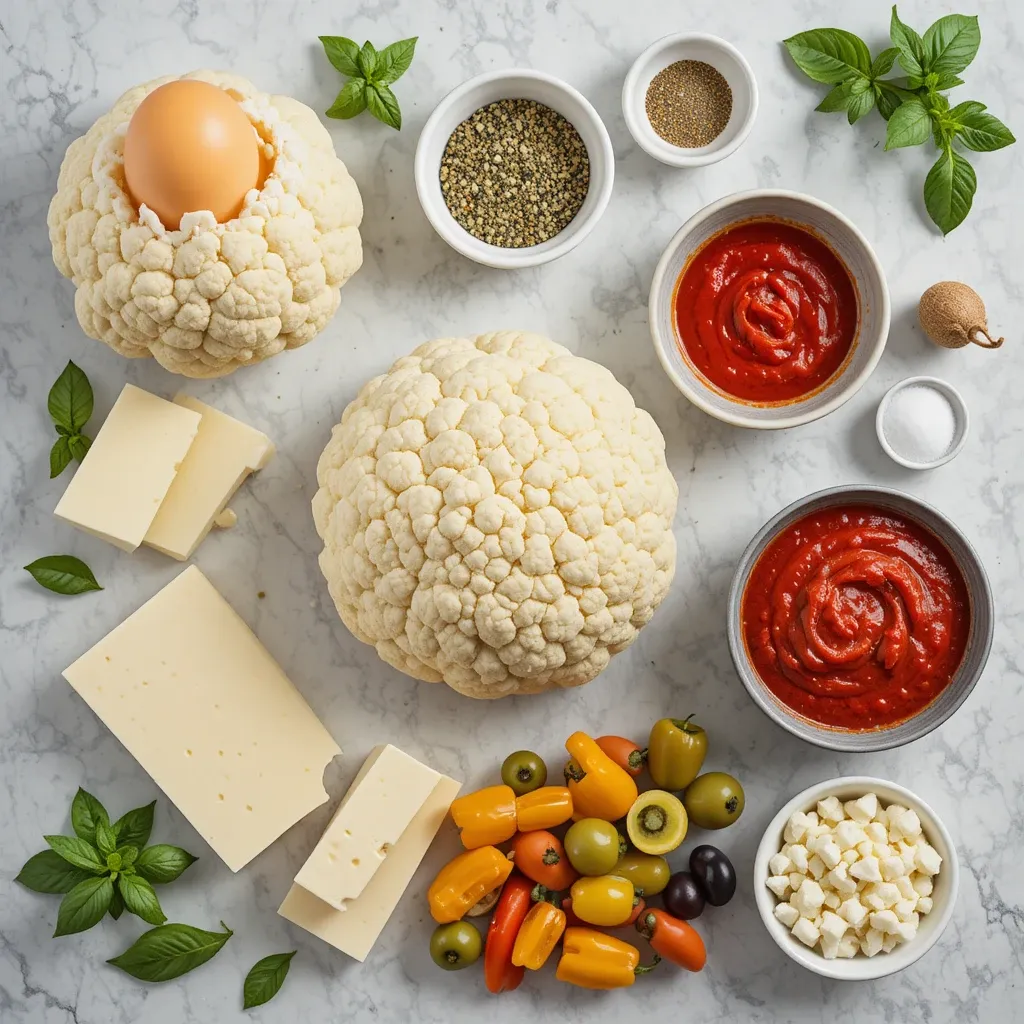
Step-by-Step Instructions
Preparing the Cauliflower Base
Start by preheating your oven to 400°F (200°C). Line a large baking sheet with parchment paper—this is crucial to prevent sticking.
If using a whole cauliflower head, remove the outer leaves and cut it into florets, including the core. Place the florets in a food processor and pulse until they resemble fine rice or couscous. You want small, even pieces about the size of rice grains. Work in batches if needed to avoid over-processing some pieces while others remain too large.
Transfer your riced cauliflower to a microwave-safe bowl. Microwave on high for 5 minutes, stirring halfway through, until the cauliflower is tender. Alternatively, you can steam it on the stovetop in a pot with 1 inch of water for about 5 minutes.
Let the cooked cauliflower cool for about 10 minutes—this step is important! You need it cool enough to handle without burning your hands.
The Critical Moisture-Removal Step
Here’s where many people go wrong, and it’s the absolute key to success. Place your cooled cauliflower in the center of a clean kitchen towel or several layers of cheesecloth. Gather the corners and twist tightly, squeezing as hard as you can over the sink.
Keep squeezing until no more liquid comes out. I’m serious—squeeze until your hands hurt! You should extract about 1 to 1½ cups of liquid. This moisture removal is what transforms soggy disappointment into crispy perfection. If you skip this or do it half-heartedly, your crust will be mushy and fall apart.
Mixing the Dough
Transfer your thoroughly squeezed cauliflower to a large mixing bowl. It should look dry and crumbly. Add the beaten egg, 1 cup of mozzarella cheese (save the rest for topping), Parmesan cheese, oregano, garlic powder, salt, and pepper.
Mix everything together with your hands or a sturdy spoon. The mixture should be sticky but hold together when pressed. It won’t look like traditional pizza dough—it’s more like a cohesive cauliflower mixture that can be molded.
Forming and Baking the Crust
Transfer your cauliflower mixture to the prepared baking sheet. Using your hands or a spatula, press and shape it into a round or rectangular crust about ¼ inch thick. Keep the edges slightly thicker than the center to prevent burning.
Make sure the crust is compact and even—no thin spots or holes. Remember, unlike traditional dough, this won’t rise or spread, so the shape you create is the shape you’ll get.
Bake for 20-25 minutes until the crust is golden brown and firm to the touch. The edges should be crispy and slightly darker. You want it well-done enough to handle toppings.
For extra crispiness, carefully flip the crust using a large spatula (or slide a piece of parchment paper on top, flip the whole thing, and peel off the original paper). Bake for another 5 minutes on the second side.
Adding Toppings and Final Bake
Remove the crust from the oven. Spread your marinara sauce over the surface, leaving about a ½-inch border around the edges. Sprinkle the remaining ½ cup mozzarella cheese, then add your chosen toppings.
Don’t overload the crust—too many heavy toppings will make it soggy. A light hand ensures the crust stays crispy and manageable.
Return to the oven and bake for 8-10 minutes until the cheese melts and bubbles. If you want extra browning, turn on the broiler for the last 1-2 minutes, but watch it carefully!
Remove from the oven, let it cool for 5 minutes to firm up, then slice and garnish with fresh basil. Enjoy immediately while it’s at its crispiest!

What to Serve Cauliflower Pizza Crust With
This pizza pairs beautifully with a variety of sides that complement without overwhelming. A crisp Caesar salad with crunchy romaine and tangy dressing provides a refreshing contrast to the warm pizza. Roasted vegetables like Brussels sprouts, carrots, or asparagus add extra nutrition and color to your plate.
For something lighter, serve with a simple arugula salad dressed with lemon juice and olive oil. The peppery greens cut through the richness of the cheese perfectly. Garlic bread might seem redundant, but honestly, if you’re craving it, go for it—this is about enjoying your meal!
Beverage-wise, sparkling water with lemon keeps things light and refreshing. If you’re having guests, a nice sparkling grape juice or homemade lemonade makes the meal feel special. For a complete Mediterranean experience, serve with hummus and veggie sticks as an appetizer.
Top Tips for Perfecting Cauliflower Pizza Crust
Master the Moisture Removal
I cannot stress this enough—removing moisture is the single most important step. Squeeze that cauliflower like your life depends on it. Even when you think you’ve squeezed enough, squeeze more. The drier your cauliflower, the crispier your crust. If you have a potato ricer, you can use it after the initial towel squeeze for even better results.
Choose the Right Cheese
Use freshly shredded mozzarella, not the pre-shredded kind in bags. Pre-shredded cheese contains anti-caking agents that prevent it from melting properly and binding the crust. Freshly shredded cheese creates a better texture and helps hold everything together. The Parmesan adds flavor and structure, so don’t skip it.
Thickness Matters
Press your crust to an even ¼-inch thickness. Thicker crusts take longer to cook and may stay soggy in the middle. Thinner crusts become too brittle and cracker-like. The edges can be slightly thicker to create a raised “crust” effect, but keep the center consistently thin.
Use a Pizza Stone for Best Results
If you have a pizza stone, preheat it in the oven for 30 minutes before baking. The hot stone creates immediate heat contact, resulting in a crispier bottom. You’ll need to carefully transfer your formed crust on parchment paper directly onto the stone.
Don’t Overload with Toppings
Less is more with cauliflower crust. Heavy, wet toppings will weigh down the crust and make it soggy. Pre-cook watery vegetables like mushrooms or bell peppers to remove excess moisture. Pat wet ingredients like fresh tomatoes with paper towels before adding them.
The Flip Technique
Flipping the crust halfway through baking ensures both sides get crispy and fully cooked. It might feel intimidating, but using parchment paper makes it simple—just place another sheet on top, flip the whole thing, and peel off the original paper.
Let It Rest
After the initial bake, let the crust cool for 3-5 minutes before adding toppings. This helps it firm up and makes it easier to handle. After adding toppings and the final bake, let it rest for another 5 minutes. This resting time allows the cheese to set slightly, making slicing much easier.
Storing and Reheating Tips
Refrigerator Storage
Store leftover pizza in an airtight container in the refrigerator for up to 3-4 days. Place parchment paper between slices to prevent them from sticking together. The crust will soften in the fridge, but proper reheating can restore much of the original texture.
Freezing the Crust
You can freeze the crust before or after adding toppings. For unbaked crusts, complete the initial baking step, let cool completely, then wrap tightly in plastic wrap and aluminum foil. Label with the date and freeze for up to 3 months.
For fully prepared pizza, freeze individual slices on a baking sheet until solid, then transfer to freezer bags. This prevents them from sticking together and lets you grab just what you need.
Reheating for Best Texture
The oven or air fryer gives the best results for reheating. Preheat your oven to 375°F and place pizza directly on the oven rack or a baking sheet for 8-10 minutes until heated through and crispy.
An air fryer is even better—it reheats pizza in just 3-5 minutes at 350°F and restores that wonderful crispy texture. The microwave works in a pinch, but expect a softer, less crispy crust. If using the microwave, place a cup of water inside with the pizza to prevent it from drying out.
Freezer to Table
Frozen pizza can go straight from freezer to oven. Bake at 400°F for 15-20 minutes if it has toppings, or 10-12 minutes for a plain crust before adding fresh toppings. No need to thaw—just adjust your timing slightly.
Tips for Avoiding Common Baking Mistakes
Mistake: Soggy, Falling-Apart Crust
This happens when moisture isn’t properly removed. Always squeeze the cauliflower multiple times until absolutely no more liquid comes out. Cook the cauliflower completely before squeezing—undercooked cauliflower retains more moisture. Using frozen cauliflower? Thaw it completely and squeeze even more aggressively than fresh.
Mistake: Crust Sticking to the Pan
Never skip the parchment paper! Aluminum foil or a bare baking sheet will cause sticking nightmares. Make sure your parchment paper covers the entire crust area. Lightly spray the parchment with cooking spray for extra insurance, though it’s usually not necessary.
Mistake: Burnt Edges, Raw Center
This indicates uneven thickness. Use your hands to press the crust to an even thickness throughout, checking from different angles. Rotate your baking sheet halfway through cooking to ensure even heat distribution, especially if your oven has hot spots.
Mistake: Crust Breaking When Slicing
Let the pizza rest for 5-10 minutes after baking. Cutting immediately causes the cheese to tear and the crust to crumble. Use a sharp pizza cutter or chef’s knife with a rocking motion rather than sawing back and forth.
Mistake: Bland, Flavorless Crust
Don’t forget to season! The cauliflower itself is mild, so the herbs, garlic, and cheese are essential for flavor. Taste your mixture before baking (it’s safe—there’s only one egg) and adjust seasoning as needed. Adding a pinch of red pepper flakes or Italian seasoning can elevate the flavor significantly.
Mistake: Raw-Tasting Cauliflower Flavor
This usually means the cauliflower wasn’t cooked enough initially or the crust didn’t bake long enough. The crust should be deeply golden brown, not pale. Don’t be afraid to let it develop color—that’s where the flavor comes from. The initial bake should be at least 20 minutes, possibly longer for very thick crusts.
Frequently Asked Questions
Can I use frozen cauliflower for this recipe?
Yes! Frozen cauliflower works perfectly and actually saves time since it’s already broken down. Make sure to thaw it completely, then squeeze out every drop of moisture—frozen cauliflower tends to be even wetter than fresh. You don’t need to cook thawed frozen cauliflower before squeezing.
Is cauliflower pizza crust keto-friendly?
Absolutely! This recipe is naturally low in carbohydrates and high in healthy fats from the cheese, making it perfect for ketogenic diets. Each serving contains approximately 4-6 grams of net carbs, compared to 30-40 grams in traditional pizza crust.
Can I make this crust without cheese?
The cheese is crucial for binding and structure in this recipe. For a dairy-free version, you can try nutritional yeast combined with a flax egg and almond flour, but the texture will be different. Check out vegan cauliflower crust recipes specifically designed without dairy for better results.
Why is my crust soggy even after squeezing the cauliflower?
You likely didn’t squeeze enough—keep going until it feels almost dry. Also check that you’re not overloading with wet toppings, you’re baking at the correct temperature, and your oven is fully preheated. Using a pizza stone helps tremendously with moisture issues.
Can I prep the crust ahead of time?
Yes! You can rice the cauliflower and squeeze out moisture up to 24 hours ahead. Store the dried cauliflower in an airtight container in the fridge. You can also bake the plain crust, cool it completely, and refrigerate for up to 2 days before adding toppings.
How do I get my crust extra crispy?
Use a pizza stone preheated for 30 minutes, flip the crust halfway through baking, squeeze every drop of moisture from the cauliflower, bake until deeply golden brown, and avoid wet or heavy toppings. The broiler for the last minute also adds nice crispiness.
Can I double this recipe?
Definitely! Double all ingredients and make two crusts. Just make sure to squeeze each batch of cauliflower separately and thoroughly. You can bake them both at once on separate racks, rotating positions halfway through for even cooking.
What’s the best way to cut cauliflower pizza?
Use a sharp pizza wheel or a large chef’s knife with a rocking motion. Let the pizza rest for 5 minutes after baking so the cheese sets. Cutting immediately will cause everything to slide around and fall apart.
Nutrition Information
| Nutrient | Per Serving (¼ pizza) |
|---|---|
| Calories | 180 |
| Total Fat | 11g |
| Saturated Fat | 6g |
| Cholesterol | 75mg |
| Sodium | 480mg |
| Total Carbohydrates | 8g |
| Dietary Fiber | 2g |
| Net Carbs | 6g |
| Sugars | 3g |
| Protein | 14g |
| Vitamin C | 45% DV |
| Calcium | 25% DV |
| Iron | 6% DV |
Nutrition information is approximate and based on the crust alone without additional toppings
This cauliflower pizza crust has completely transformed the way I think about healthy eating. It’s proof that eating well doesn’t mean giving up the foods you love—it just means getting creative! Whether you’re following a specific diet, trying to add more vegetables to your family’s meals, or simply curious about this veggie-based trend, this recipe delivers on every level.
The crispy edges, the cheesy flavor, the satisfaction of creating something delicious from scratch—it all comes together in one amazing meal. Give it a try this weekend, and I bet it becomes a regular in your dinner rotation. Your taste buds and your body will thank you!
